

Smart Ways to Design a Comfortable Home with Functional Furniture and Decor Elements
Creating a Home That Balances Comfort and Style
A home starts to feel right when it works for your daily life, not just when it looks good in pictures. Many times, people focus too much on how things appear and forget how they will actually use the space every day. Over time, that creates small inconveniences that slowly become frustrating.
The idea is not to choose between comfort and appearance. Both can exist together if the choices are made with a bit of thought. The furniture you bring in and the way you place it should make your routine easier, not more complicated.
Simple decisions, like where you place your seating or how much storage you actually need, can change how the space feels. When everything has a purpose and is placed in a way that makes sense, the home starts to feel more relaxed and easier to live in.
Choosing Functional Furniture for Every Room
Furniture takes up most of the space in any home, so it makes sense to choose pieces that do more than just fill the room. Functional furniture is not about adding more items, but about choosing better ones.
For example, when you look for a bed online, it helps to think beyond just the design. Beds with storage can solve a lot of space issues without needing extra cabinets. They keep things out of sight but still within reach, which makes the room feel less cluttered.
The same goes for other pieces. Foldable tables, sofa cum beds, or compact seating can be useful, especially if the space is limited. These options give you flexibility without making the room feel crowded.
A wardrobe is another important piece that often gets overlooked while planning. It is not just about how it looks from the outside, but how well it holds your everyday items. A well planned wardrobe with the right sections can save time and effort every day.
Material and build quality also matter. Furniture is something you use daily, so it should be able to handle regular use without wearing out quickly. It is better to invest in something that lasts rather than replacing things often.
Smart Layout and Placement of Furniture
Even the right furniture can feel wrong if it is not placed properly. Layout plays a big role in how easy a home feels to move around in.
Start by thinking about how you use each room. In the living room, you may want space for sitting and relaxing. In a bedroom, you need clear access to your bed and storage. Instead of placing everything at once, it helps to arrange key pieces first and then adjust around them.
Creating small zones can make a big difference. A corner for reading, a space for working, or a clear dining area can help in organising the room without adding walls or dividers. It keeps things simple but still structured.
Avoid filling every corner with furniture. Leaving some open space actually makes the room feel bigger and easier to use. It also allows you to move around without constantly adjusting things.
Another small but important point is accessibility. Items that you use daily should be easy to reach. If you have to keep moving things around to get to what you need, the setup is probably not working well.
Integrating Practical Décor Elements
Décor is often seen as something extra, but it can also be practical if chosen carefully. It is not about adding more items, but about choosing the right ones.
Mirrors, for example, can make a room feel more open, especially in smaller spaces. Placing them where they reflect light can brighten up the area without needing extra fixtures.
Lighting is another element that quietly changes how a room feels. A mix of overhead lights and softer options like lamps can make the space more comfortable, especially in the evenings.
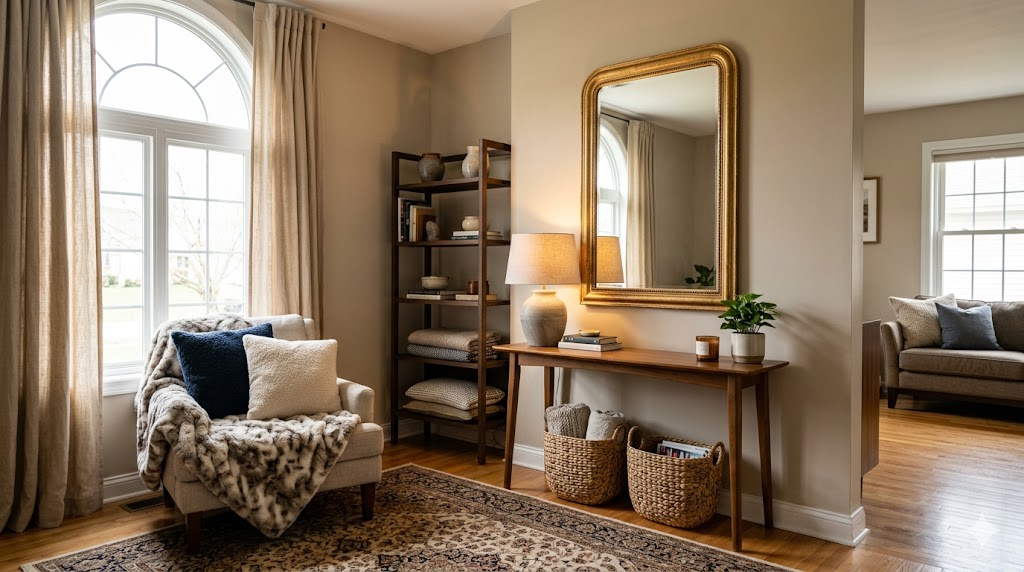
Soft furnishings like rugs, curtains, and cushions also add to the overall feel. They bring warmth and make the space more comfortable without taking up too much room. At the same time, they can tie different elements of the room together.
Storage can also be part of the décor. Baskets, boxes, or shelves can hold everyday items while still looking neat. This way, things stay organised without feeling hidden or difficult to access.
Balancing Style with Everyday Comfort
It is easy to get carried away with how things look, especially with so many ideas available everywhere. But a home should first feel comfortable to live in.
Choosing colours and materials that work well together helps in creating a sense of balance. You do not need too many variations. Even a simple combination can feel complete if it is consistent across the space.
Trends come and go, so it is better not to rely completely on them. Mixing a few current ideas with more basic pieces usually works better in the long run. This way, the space does not feel outdated too quickly.
Comfort should always come first. A sofa that looks good but is not comfortable to sit on will not be used much. The same goes for any other furniture. If it does not support your daily routine, it will start to feel like a bad choice over time.
Keeping things simple often works best. When there is less to manage, the space stays easier to maintain and more enjoyable to use.
Designing a Home That Feels Inviting and Functional
Designing a home does not need to be complicated or overwhelming. It is more about understanding what you need and making choices that support that.
When you pick furniture that serves a purpose and place it in a way that makes sense, the space naturally feels more comfortable. Adding décor that is both useful and pleasant to look at helps in completing the setup.
Small details, like choosing the right bed online or organising your wardrobe properly, can have a bigger impact than expected. Over time, these decisions shape how easy your daily life feels at home.
In the end, a good home is one where everything works without much effort. It feels comfortable, organised, and easy to live in, and that is what really makes a difference.